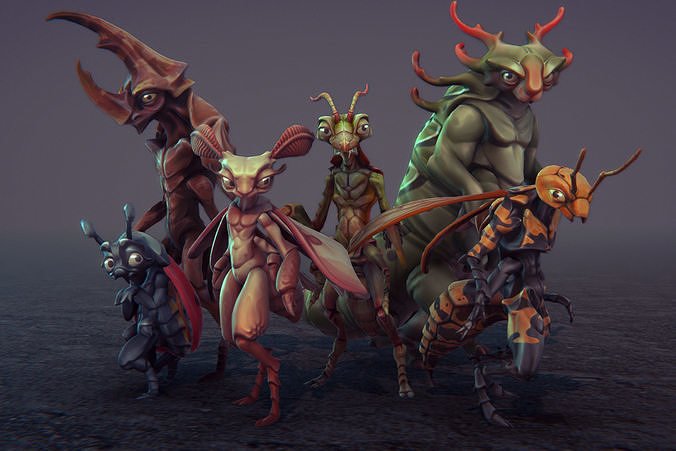
Designing and animating insect characters can feel like a daunting task, bridging the gap between scientific accuracy and fantastical storytelling. Yet, there’s an undeniable magic in bringing these tiny, often misunderstood, creatures to life. From the intricate articulation of a beetle's carapace to the delicate flutter of a butterfly's wings, mastering character design and animation techniques for insect characters isn't just about mimicry; it's about infusing personality and narrative into every segment and antennae twitch. It’s about transforming what might be seen as creepy-crawlies into charismatic stars, driving your story forward and enchanting your audience.
At a Glance: Crafting Compelling Insect Characters
- Start with Persona: Define your insect's unique personality, backstory, and role before sketching.
- Seek Diverse Inspiration: Look beyond nature documentaries—explore art, fashion, and even architecture.
- Prioritize Silhouette: A strong, recognizable silhouette makes your character memorable and readable.
- Simplify Anatomy: Realism is a reference, not a rigid rule. Focus on conveying the essence of the insect.
- Master Locomotion: Understand how insects move to create believable, dynamic animation.
- Emotional Expressiveness: Innovate ways to show emotion, even without human-like faces.
- Consistency is Key: Use turnarounds and model sheets to maintain design integrity across production.
The Buzzworthy Appeal: Why Insect Characters Captivate
Insects hold a peculiar place in our imaginations. They can be menacing villains, helpful sidekicks, or wise mentors, often embodying themes of resilience, community, or transformation. This inherent versatility makes them fantastic subjects for animation. Unlike humans, insects offer an immediate canvas for unique anatomy, diverse locomotion, and alien perspectives. You're not just designing a character; you're crafting an entire world of biological marvels scaled up for an audience.
However, their non-human forms also present unique challenges. How do you convey emotion without traditional facial expressions? How do you make their multi-limbed movements fluid and engaging, rather than stiff or unsettling? The answer lies in a blend of thoughtful design principles and clever animation techniques, all rooted in a deep understanding of what makes a character resonate.
From Concept to Creature: The Design Blueprint
Every compelling insect character begins long before the first line is drawn. It starts with a story, a purpose, and a personality waiting to emerge.
Defining Your Bug's Persona
Before you pick up a pencil, spend time building a robust character profile. Ask yourself:
- What's their backstory? Were they once a timid larva who transformed into a fierce warrior? A lonely worker bee dreaming of adventure?
- What are their core personality traits? Are they clumsy and lovable like a dung beetle struggling with its ball, or agile and cunning like a praying mantis?
- What motivates them? Survival, love, revenge, a quest for nectar?
- What's their role in the story? Hero, villain, comic relief, mentor?
Consider their "species" as a starting point. A beetle offers a different physical toolkit and thematic potential than a spider or a butterfly. This initial groundwork creates a solid foundation, ensuring your design choices are driven by narrative, not just aesthetics.
The Inspiration Hunt: Beyond the Entomology Textbook
While observing real insects is invaluable, true inspiration for unique bug character design inspiration extends far beyond scientific accuracy.
- Nature,當然: Study documentaries, close-up photography, and even actual preserved specimens. Pay attention to segmented bodies, exoskeletons, compound eyes, wing venation, and leg articulation. How do they move? What textures do they possess?
- Art & Mythology: Look at ancient Egyptian scarabs, Japanese insect art, or even tribal masks that abstract insect forms. How have other cultures interpreted these creatures?
- Everyday Life: A rusty piece of metal might inspire a beetle's texture; a beautifully patterned mosaic could inform wing design; the movement of a mechanical toy might spark an idea for limb articulation.
- Other Media: Analyze how other animators have tackled insect characters. What worked, what didn't? What unique visual language did they create?
Maintain a dedicated sketchbook or digital folder for all your reference materials. This visual library will be your wellspring of ideas.
Sketching & Iteration: The Lifecycle of an Idea
Once you have a concept, it's time to explore. Don't commit too early.
- Thumbnail Sketches: Start small and rough. Explore dozens of different poses, expressions (even subtle ones), and above all, silhouettes. A strong, recognizable silhouette is crucial for readability, especially for multi-limbed creatures. Does your character look like a beetle, a spider, or a generic blob from a distance?
- Experiment with Shapes & Proportions: Are they round and soft like a caterpillar, or sharp and angular like a wasp? Exaggerate features to emphasize personality. A proud, broad-shouldered beetle or a wiry, nervous grasshopper. Embrace iteration; sometimes the wildest experiments lead to the most innovative results.
- Refine Details: Once you have a strong silhouette and core proportions, begin adding details. Think about how their anatomy serves their personality and function. Does a warrior beetle have extra armored plating? Does a mischievous fly have slightly oversized, expressive eyes? Pay close attention to believable posing and articulation, even if the anatomy is stylized. Remember, clothing, accessories, and subtle facial nuances (if applicable) can greatly enhance their unique personality. This stage often requires multiple revisions, so be prepared to draw and redraw.
Anatomy of an Animated Bug: Mastering Form and Function
Designing an insect character is about more than just making it look cool; it’s about making it feel alive and authentic to its internal logic.
Simplified Realism vs. Stylized Whimsy
You have a spectrum of design approaches:
- Near-Realistic: Think documentary-style animation, but with subtle characterizations. Here, understanding real insect anatomy is paramount.
- Semi-Stylized: A common approach, where key anatomical features are recognizable, but proportions are exaggerated and simplified for expressiveness and animation ease. This is often the sweet spot for designing charismatic cartoon bug characters.
- Highly Stylized/Abstract: Barely resembling a real insect, using shape language and implied characteristics to convey "bug-ness." Think fantastical creatures inspired by insects.
Choose the approach that best serves your story and target audience. For most animated narratives, a semi-stylized approach offers the most flexibility.
The Power of Proportions & Silhouette
We touched on silhouettes during sketching, but it bears repeating: it's arguably the most critical element.
- Clear Readability: Can your character be identified by its outline alone?
- Distinctive Form: Avoid generic shapes. A round body, thin legs, and prominent antennae immediately suggest a spider, whereas a segmented body, broad wings, and six defined limbs suggest a bee.
- Proportional Storytelling: A character with huge, expressive eyes might be curious or innocent; a powerful jaw could signify strength or aggression. Exaggerate features that define their role or personality.
Limbs, Wings, & Antennae: Crafting Dynamic Movement
These are your character's primary tools for interaction and expression.
- Legs/Limbs: How many? How do they articulate? Do they scuttle, crawl, leap, or scurry? Each gait suggests a different personality and physical capability. Simplify the joint structure for animation without losing the essence of multi-legged movement.
- Wings: Are they membranous and delicate (butterfly, dragonfly), or hard and protective (beetle elytra)? How do they fold, unfurl, and beat? The wing shape and movement greatly influence the character's grace, speed, or clumsiness.
- Antennae: These are often the most overlooked expressive elements. They can droop in sadness, perk up in curiosity, twitch in fear, or wave defiantly. Treat them almost like extra fingers or a tail, capable of conveying subtle emotion.
Facial Expressions (or Lack Thereof) & Emotion
This is where insect character design truly diverges from humanoids. Most insects don't have human-like faces, so how do they show emotion?
- Body Language is Paramount: A slumped posture, an aggressive thrust of the head, a hesitant scuttle—these communicate volumes.
- Antennae & Mandibles: As mentioned, antennae are fantastic for subtle emotional cues. Mandibles can clench in anger or drop in despair.
- Exaggerated Eyes: While compound eyes don't traditionally move, you can cheat with highlights, pupil-like elements, or even slight shape shifts (squash and stretch) to suggest focus, surprise, or fear.
- Color Shifts: Some insects change color. This could be a dramatic tool for emotional expression in animation.
- Vocalizations & Sound Design: A buzzing hum, a sharp click, a frantic chirp – sound can bridge the gap where visual expression is limited.
Color, Texture, & Lighting: Painting Your Bug's World
Color evokes emotions, sets moods, and defines environment.
- Palette Choices: A vibrant, saturated palette for a playful butterfly; muted, earthy tones for a camouflaged stick insect; metallic sheen for a tough beetle. Choose colors that reflect personality and narrative context.
- Texture Speaks Volumes: Is your character smooth and slimy, rough and chitinous, fuzzy and soft, or iridescent? Textures add depth and tactile realism, making your character feel more present. Experiment with shading and texturing to define form and weight.
- Light & Shadow: How does light interact with their exoskeleton, their fur, their wings? Accurate light and shadow create form, atmosphere, and can dramatically highlight features or obscure others for dramatic effect.
Bringing Bugs to Life: Animation Techniques
Once your design is robust, the real magic of animation begins. Translating a static drawing into a living, breathing creature requires specific techniques.
Understanding Insect Locomotion
This is fundamental. Real insects have complex gaits and movements.
- Walk Cycles: Most insects are six-legged. The typical pattern is a tripod gait: three legs (e.g., front-left, mid-right, back-left) move forward while the other three support the body. Then the pattern alternates. Simplify this for animation, focusing on the rhythmic shift of weight and the illusion of many legs. For core animation principles for bugs, understanding real-world physics is key, even if you bend them.
- Flight Patterns: Butterflies flutter, dragonflies glide with rapid wing beats, bees hover. Observe these unique mechanics. Pay attention to how the body reacts to the wings, creating drag, lift, and momentum.
- Crawling & Slithering: Caterpillars undulate, worms stretch and contract. Capture the segmented movement and the transfer of energy through the body.
Weight, Anticipation, & Follow-Through
These universal animation principles are especially crucial for insect characters.
- Weight: An armored beetle will move with more heft and inertia than a nimble mosquito. Convey this through squash and stretch, timing, and overlapping action.
- Anticipation: Before a leap, a grasshopper compresses its legs. Before a strike, a mantis might coil. This builds expectation and makes the action more powerful.
- Follow-Through & Overlapping Action: When a beetle lands, its antennae might wobble for a moment. When a fly stops suddenly, its wings might twitch. These subtle secondary actions add realism and life.
Rigging Insect Characters: Unique Considerations
Rigging, the process of creating a digital skeleton, has specific challenges for insects.
- Segments & Joints: Insects often have many body segments and limb joints. Your rig needs to handle this complexity efficiently.
- IK/FK Blends: Inverse Kinematics (IK) for ground contact and forward Kinematics (FK) for free-moving elements like antennae or wings are essential.
- Wing Deformation: Rigging wings to flap convincingly, potentially with secondary controls for bending or folding, is crucial. For detailed guidance on specialized rigging techniques for insect animation, consider resources focused on multi-limbed characters.
- Exoskeleton Rigging: Unlike skin, exoskeletons don't deform fluidly. Your rig needs to manage hard-surface deformation or rely on clever blend shapes and joint placement to avoid "crunching" geometry.
VFX for Insect Characters: Adding Sparkle
Visual effects can elevate your insect character.
- Iridescence & Sheen: Specialized shaders can simulate the dazzling, shifting colors of many insect exoskeletons and wings.
- Dust & Particles: The tiny dust motes disturbed by a beetle's scuttle or the pollen clinging to a bee's leg add tactile realism.
- Glow & Bioluminescence: For fantasy insects, glowing patterns or bioluminescent elements can add magical qualities.
Dialogue & Lip-Sync (or Alternative Communication)
If your insect character speaks, traditional lip-sync may be required. However, if they don't have human-like mouths, you'll need creative alternatives:
- Mandible Movement: Exaggerated mandibles can articulate words or communicate emotions.
- Antennae "Speech": A complex dance of antennae could convey meaning.
- Sound Design: As mentioned, chirps, clicks, or hums can be integrated with body language to create a unique communication style.
Consistency is Key: Turnarounds & Model Sheets
Once your character design is finalized and approved, you need to ensure it remains consistent throughout the animation pipeline. This is where turnarounds and model sheets become indispensable.
- Turnarounds: These are detailed drawings of your character from multiple angles (front, side, back, ¾ views). They establish the character's exact proportions, shape, and unique features from every perspective.
- Model Sheets: These go further, providing additional information like expressions (happy, sad, angry), specific poses, breakdowns of key features (e.g., different wing positions, antennae angles), and sometimes even color palettes. They serve as the definitive visual guide for all animators, ensuring your beetle looks like your beetle, no matter who's drawing or modeling it. Think of it as optimizing your insect character pipeline by creating a universal visual language.
Collaboration & Refinement: Working with the Hive
Character design and animation are rarely solitary endeavors. You'll likely be working with a team of animators, writers, directors, and producers.
- Effective Communication: Clearly articulate your design choices and the reasoning behind them.
- Open to Feedback: Be prepared for constructive criticism. Sometimes, an outside perspective can highlight areas for improvement you might have missed. Embrace iteration not just in sketching, but in the collaborative review process. The goal is always to make the character stronger and more compelling for the story.
Common Pitfalls to Avoid in Insect Character Design
Even seasoned designers can stumble. Here are a few traps to watch out for:
- "Creepy-Crawly" Stereotypes: Don't default to making all spiders scary or all bees cute. Challenge conventions to create more nuanced characters.
- Over-Complication: Real insect anatomy is incredibly complex. Trying to replicate every joint and segment can lead to stiff, difficult-to-animate characters. Simplify!
- Lack of Emotional Range: If your insect character is central to the story, ensure they have sufficient visual means (body language, antennae, exaggerated features) to convey a broad spectrum of emotions.
- Ignoring Weight & Physics: Even in a fantasy setting, a character's movement should have believable weight and react to forces, otherwise, they'll feel floaty and unreal.
- Inconsistent Design: Without proper model sheets, characters can subtly change shape, color, or proportion from scene to scene, breaking immersion.
Showcasing Your Swarm: Building a Portfolio
Once you've honed your skills, it's time to share your insect creations with the world. Building a strong portfolio is essential for attracting potential clients or landing a job.
- Diversity is Key: Showcase a range of insect characters—from fearsome predators to delicate fairies, across different styles (realistic to highly stylized).
- Process, Not Just Product: Include sketches, iterations, and your turnaround sheets alongside your final designs. This demonstrates your thought process and problem-solving abilities.
- Animation Reels: If you're an animator, a reel showing your insect characters in motion, highlighting unique walk cycles, flight patterns, and expressions, is crucial.
- Online Presence: Host your portfolio on a professional platform. Network with other industry professionals, participate in online communities, and attend workshops or courses (like the NYU Animation Industry Essentials program) to continually develop your craft. The journey of mastering character design is continuous, fueled by creativity, dedication, and a deep understanding of how to tell a story through every intricate detail of your animated world.
Whether you’re aiming for the next Pixar hit or a charming indie animation, the world of insect characters offers boundless creative opportunity. Now go forth and give those tiny titans the grand stage they deserve! And while you're at it, Explore our bug cartoons for more inspiration.